
Songwriting for Ages 0-6
Listen on: Apple Podcasts | Spotify | Amazon Music | Stitcher
When it comes to songwriting, some of us love it, and others find it intimidating. If you feel like songwriting might not be for you, keep reading because I’m sharing three different tools that I use specifically when I write music for kids under the age of six. At the end of this blog post, I’m sharing a song I use a lot called “Whatcha Gonna Do?” Kids love this silly movement song. There is an entire section of it that is all about how silly you can be, but it is still a very structured song so that kids don’t have the opportunity to get too out of control.
Everybody has something that they're really good at, and for me, one of the things that I tend to be pretty good at is creating songs that are catchy and captivating to kids. When I am writing songs for kids, I play around with the different elements of music (the lyrics, the melody, the harmony, the rhythm, etc.) so that I can increase the time that a child is going to be able to pay attention to my music and therefore be helped by music according to their needs and/or goals, in a music education or music therapy setting.
Even though songwriting comes naturally to me and I am constantly writing new songs (I write about 10-12 original children songs that I share with the Community & newsletter subscribers), I don't want to give the impression that I am like able to just make every song that I write end up being catchy and really great for kids. The reality is that sometimes they don't work out and they just kind of end up in a vault. But what ends up happening is that I'm building this practice of writing. I'm building this practice of creativity and I have this consistency of my writing.

So, here are the three things are absolutely central to helping me write fun and captivating songs for kids.
1. Keep it simple
I keep it really, really simple with kids ages zero to six. Repetition is another word I would use. I took a handful of songwriting classes when I was a music therapy major at Berkley and I loved them. One of the interesting things we did in those songwriting classes was analyzing popular songs to figure out why they were so popular, and it turns out that its all about the chorus. They tend to have that one catchy line that is repeated multiple times. Think about the repetition in songs like “Let It Be,” “I Got A Feeling,” and “Another One Bites the Dust.” Picking a catchy line and repeating it multiple times is something I do often when songwriting.
One of my most popular children’s songs is called “Move It, Move It!” The lyrics are delightfully simple and repetitive.
Move It, Move It!
Move it, move it
Let me see you move it, move it
Move it, move it, til I say stop
Now shake it up, shake it up, shake it up, shake it up yeah.....
Come on let’s move it, move it
Come on let’s move it, move it
Come on let’s move it, move it
Move it, move it, til I say STOP
The song I will share at the end, “What You Gonna Do” is another example of a catchy line that repeats. While it includes variations, it remains repetitive in nature.
2. Add a little bit of silliness
Alright, so let’s go ahead and move on to my number two tool: Silliness. Kids pay attention to something when it is silly. For example, one of my favorite silly activities to increase attention with kids is having them wiggle their eyebrows. If your class or the kid that you are working with seems a bit overstimulated and full of energy, give this a try:
Have the kids wiggle their eyebrows as a replacement for another motion in a movement song. This is so challenging for kids to do, and so they tend to stop whatever they were doing. They can’t move any other part of their body or talk at the same time because they have to focus solely on wiggling their eyebrows. This is a great tool for increasing engagement.
I aim to have enough flexibility in the songs that I write to allow for these moments of silliness, but you can also build it into the existing song as you write them.

3. Include some musical surprises
So far we have simplicity and silliness, and the third tool is musical surprises. This is yet another way that you can play around with musical structure and various elements of music like lyrics, melody, harmony, and rhythm to add in elements that might be unexpected. Everyone, even those who don’t consider themselves musical, has an innate understanding of music. So, if the musical structure is a little bit off, they may not like the song, even if they don’t understand why. As music therapists and music educators, we can leverage this musical structure to our advantage by playing around with the musical structure to insert surprising elements.
For example, I have a song called “Driving Our Car” about a red light where everybody stops, creating a moment of complete silence. But instead of choosing a predictable four or eight beats of silence, anticipating the light to turn green, I ultimately chose six beats. This might go unnoticed by kids, but they will instinctively feel this sense of it being time to move.
I do something very similar in another song of mine called “Scurry Stick,” which I introduced in episode 9 of the podcast and in this blog post. In the song, kids experience unpredictable durations of “sticking” to surfaces - sometimes it’s very short and sometimes it’s quite a bit longer.
When you make things unpredictable in music, two things can happen. Children may listen really intently, eagerly anticipating the next cue to dance after they’re frozen. Or, if their attention starts to wander, a sudden silly action can redirect their attention back to you by doing something unexpected or out of the ordinary.
Moments of unpredictability is a tool I use all the time. Sometimes, I’ll just make a silly sound like a playful “ooh” where it doesn’t necessarily belong in a song. When they look at me confused, suddenly I have their attention again. Similarly, classroom teachers use techniques like whispering, making it so that kids have to be really quiet and get close so that they can understand what’s going on. So, incorporating any of these unexpected moments into songs are tools you can use to make the songs more exciting and can help to keep the kids engaged.
To recap, the three things that are central to helping me write captivating songs for kids are simplicity, silliness, and unexpected surprises. I always prefer to present songs live so that I can watch and take their input, incorporating their ideas to adapt in the moment. But, I do also record these songs, which presents the challenge of capturing all of these elements that exist in live music. It’s something I have worked on the last few years, and it’s getting easier and easier to do.

You can find an album I released in 2018 titled Move It, Move It! It was nominated for Children’s Album of the Year by the Independent Music Awards and is available on all streaming platforms, including Spotify, Pandora, Apple Music, and Amazon Music. While it didn’t end up winning the award, the artist who took home the title that year went on to win a Grammy for her album. So, it was awesome to just even be included as a nominee!
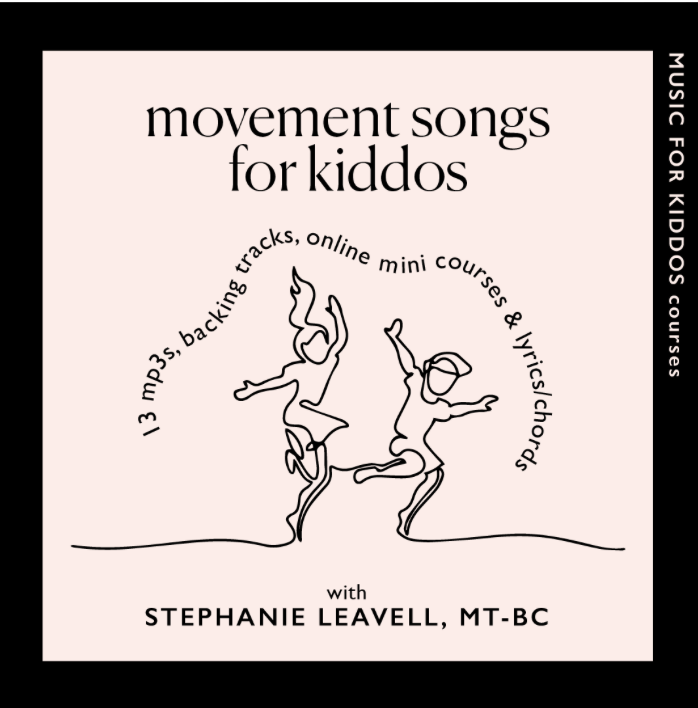
If you're interested in more on movement songs, we have a mini-course called Movement Songs For Kiddos with 13 professionally recorded movement songs, backing tracks, the chords and the lyrics for each song, & a video that explains these three kinds of movement songs, how I might use them, and implementation tips for each one of them.
Use the code podcast on the Movement Songs For Kiddos course to get $10 off. Find the course here.
Today’s resource:
🎵Download the lyrics + chords of the song Whatcha Gonna Do? here ↓
*and if you would like to receive the chords + lyrics + mp3 of original songs every month, subscribe to the Song-Of-The-Month Newsletter to get everything right in your inbox.
We have partnered with West Music to offer free shipping on orders above $59.95 to Music For Kiddos Podcast’s listeners. Check out their incredible instruments and their incredible offerings at WestMusic.com or you can place your order at their customer service hotline at (800) 397-9378.
The code for free shipping is KIDDOS26. Make sure to check them out!
Let’s keep in touch!
Song-of-the-Month Club (FREE!)
Thanks for tuning in!
Thanks for joining us on the Music for Kiddos podcast! If you enjoyed this episode, please head over to Apple Podcasts and tell us what you think by leaving a review! Don’t forget to sign up for the Song-of-the-Month-Club to receive a free, high-quality original song every month, or hang out with us on Instagram to stay connected.
This post contains affiliate links. As an Amazon Associate, I earn from qualifying purchases. I may receive a commission if you purchase through my links, at no extra cost to you. That being said, we only promote things we absolutely LOVE!