
7 Tips for Improving Vocal Health & Avoiding Vocal Injury
You use and rely on your voice so much as a music therapist and music educator—probably more than you realize. All of the talking and singing throughout your day, in addition to the mental, physical, and emotional loads you carry through your week, can drain you and take a toll on your vocal health. These 7 tips will go beyond your usual vocal warm-ups and cool downs, addressing the whole self in order to protect, restore, and maintain a healthy voice.

1. Hydrate All Day
This one might seem obvious, because we all know that hydration is important. But seriously, drink as much water as you can throughout your day. When you are hydrated, your vocal cords are well lubricated, which will help prevent vocal strain and fatigue.
If you enjoy tea, the warmth can provide a gentle and soothing support. Hydrate yourself with water during the day, and enjoy a warm cup of decaf tea in the evening. Your mental and emotional health will benefit from creating a small evening ritual that brings comfort and helps you unwind after a busy day.

Consider keeping a water bottle like this one with you during your work day.

2. Stretch More Than Your Voice
Vocal health doesn’t live only in your vocal cords. It is also effected by tension held in your body. Since you are likely up and down all day long, moving around on the floor with kids or leaning over, your body is tired by the end of the week. Incorporating gentle exercises throughout your day will help to relieve and prevent tension. It is so important to take care of our bodies.

Focus on movements that stretch and loosen your shoulders, back, and neck. You will also benefit from stretching your tongue, and including manual massages for your larynx and jaw.
3. Posture & Alignment Matters
Notice how you are sitting or standing right now. Is your neck sticking out? Are you hunched over? Maybe your shoulders are carrying stress and you’re finding them raised up instead of down and relaxed.
Poor posture can keep your diaphragm from functioning properly, which can lead to shallow breathing rather than deep, full breaths. In turn, the efficiency of your larynx is affected, causing your vocal cords to be unnecessarily strained. This ends up impacting the clarity and strength of your voice, whether speaking or singing.
Good posture isn’t just for looks. When your body is properly aligned, it allows for better sound projection and a fuller, richer tone.
Dr. Josh, Doctor of Physical Therapy shares a quick tip for finding proper posture and alignment, which works seated or standing. Watch the reel on Instagram here.

4. Rest Your Voice
Sometimes, you are forced into vocal rest because of things like sickness, allergies, or laryngitis. Those moments are frustrating, right? Something you really really shouldn’t do when your voice is tired is “push through” or whisper, because it actually requires more energy than speaking. But, intentional vocal rest can do so much good for your overall vocal health--even when you’re not losing your voice for whatever reason.

As a regular practice, consider taking “vocal naps” throughout your day, consisting of 5-10 minutes of complete silence. These naps are short but intentional, and are designed to protect your vocal cords from inflammation and fatigue, which in turn can help prevent vocal strain.
5. Warm Up AND Cool Down
You probably have some kind of vocal warm up routine before you start your day with students or clients. It would be beneficial to include some gentle body and breathing exercises into that routine, as well.
What you might not already be doing is a cooldown at the end of your day. Building in this daily practice can be so restorative and tension-relieving for your body and voice after speaking and singing all day.
Include things such as:
Stretches for your shoulders, neck, and back
Lip trills and humming
“Reset” diaphragmatic breathing
Laryngeal massage
Warm hydration
Intentional vocal nap
Shower steam or personal nebulizer

6. Avoid Clearing Your Throat
We all have those moments where we need to clear our throat. However, you actually do damage to your vocal cords when this happens. Think of it as being similar to the force of a standing ovation as opposed to normal speech. Throat clearing usually involves needing to get rid of thick mucus, but clearing causes irritation and swelling, which then creates more mucus. It’s a vicious cycle that can reduce your vocal range and wear down your vocal cords.
Some things you can do instead:
Hydrate
Swallow Hard
Try a breathy cough
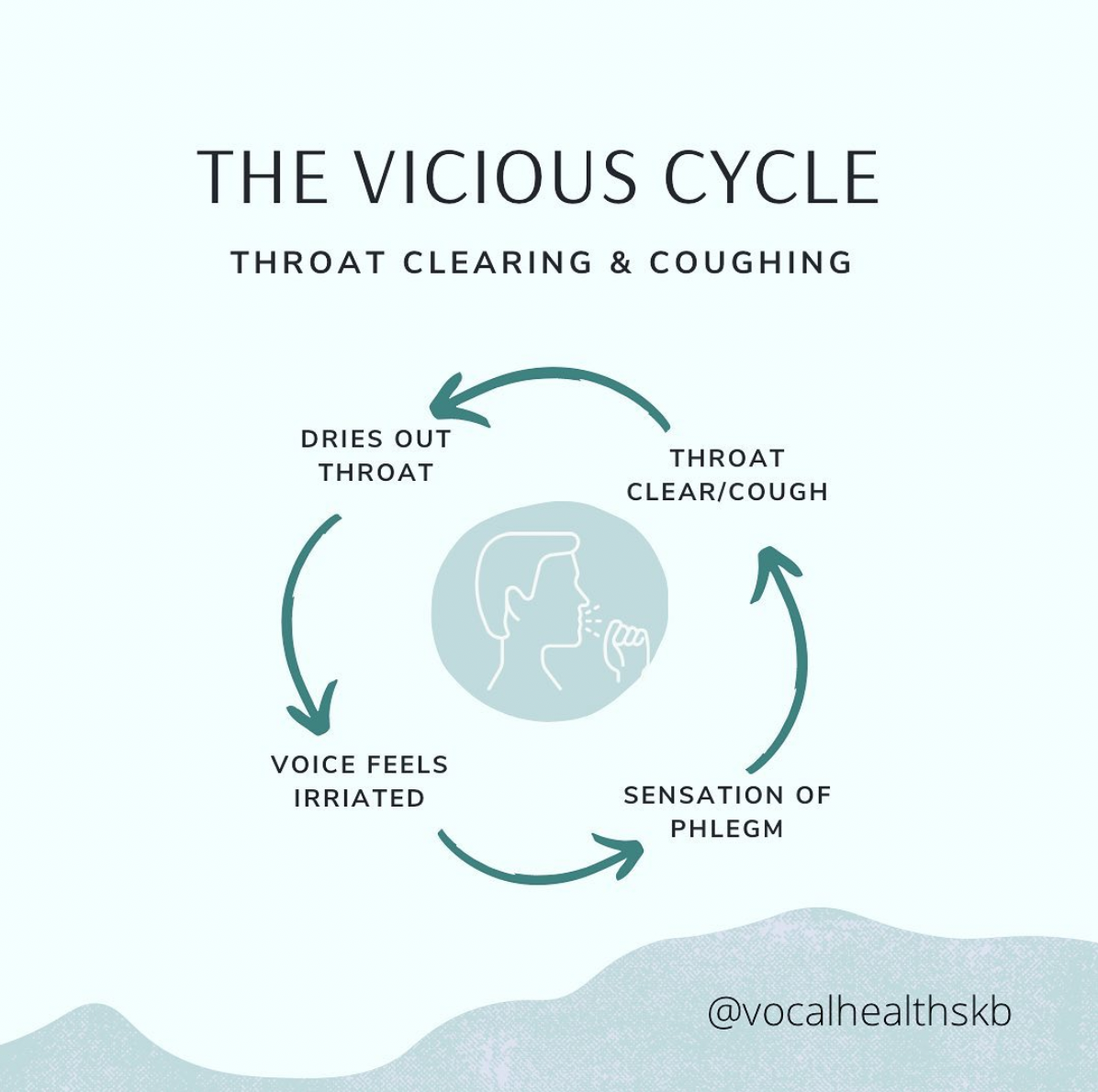
Sarah K Brown, MS, CCC-SLP illustrates this cycle well in her Instagram post here.
7. Nervous System Regulation
With all that happens in your days, it is easy to become dysregulated. If your nervous system is in fight-or-flight mode, you will carry more tension in your body and voice. This tension in your voice can reduce range and endurance, and even lead to hoarseness.
You may notice signs of dysregulation in your body such as irritability, trouble focusing, a rapid heart rate, clenched jaw, or shortness of breath. Once you are able to recognize that your nervous system is on high alert, you can take steps to deregulate.
Some things to try:
Shake It Out - It is simple, yet effective. Stand and actually “shake out” every part of your body, moving energy and tension around to release it. If you notice dysregulation in your client(s), try this with them.

Mindful Awareness - Observe your surroundings. Name objects you see, smell you notice, and sounds you here. This practice brings you back into the present moment, diverting your attention from stressors. This mindfulness practice could be incorporated into your sessions with clients, as well.
Diaphragmatic Breathing - Slowing your body down with deep, intentional breathing can activate your parasympathetic nervous system. This system is responsible for relaying sensory information to the brain. Activating it will tell your brain that you are safe, and will encourage a state of calm. Kira Willey shares a technique on her blog that “bring[s] your attention to your breath, and then “follow it” as the air travels in and out of your body.” This visualization of breath practice can be used in your sessions, too.
Music - We all know the power that music holds, so don’t forget about this one!
We would love to hear from you! What are some strategies you already implement for boosting your vocal health? Let us know in the comments below!
We have partnered with Bear Paw Creek to offer 10% off your entire purchase. They offer a great selection of movement props, instruments and more to utilize with your students and clients. Use this link or enter the code KIDDOS at checkout.
This post may contain affiliate links. As an Amazon Associate, I earn from qualifying purchases. I may receive a commission if you purchase through my links, at no extra cost to you. That being said, we only promote things we absolutely LOVE!